What's new in Release 3.3
Your Agent Stays Audible When a Voice Disappears: If the voice assigned to an agent is removed from the provider, the agent used to simply stop speaking mid-call, with nothing to show why. It now falls back automatically to a similar voice of the same gender and carries the call to the end. There is nothing to switch on, and if the original voice comes back it is used again on its own.
Missing Voices Leave the Picker: Your voices are now checked against the provider every day. One that has gone missing can no longer be selected, and any agent still assigned to it shows a warning on its Settings tab telling you the calls are running on a fallback voice. This covers the voices you cloned yourself, not just the shared catalogue, and it reads in all 16 interface languages.
Send Emails, SMS and WhatsApp to the Details Captured on the Call: Recipient fields in your message actions now understand variables. Put {{customer_email}} in the “to” field and the confirmation goes to the address the caller just gave you, until now the variable was passed on as literal text and the message reached nobody. The same works for phone recipients, you can still list several, and a recipient whose variable comes back empty is left out rather than sent to a blank address.
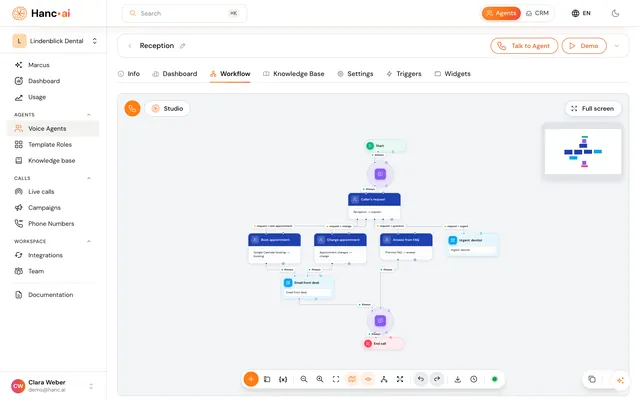
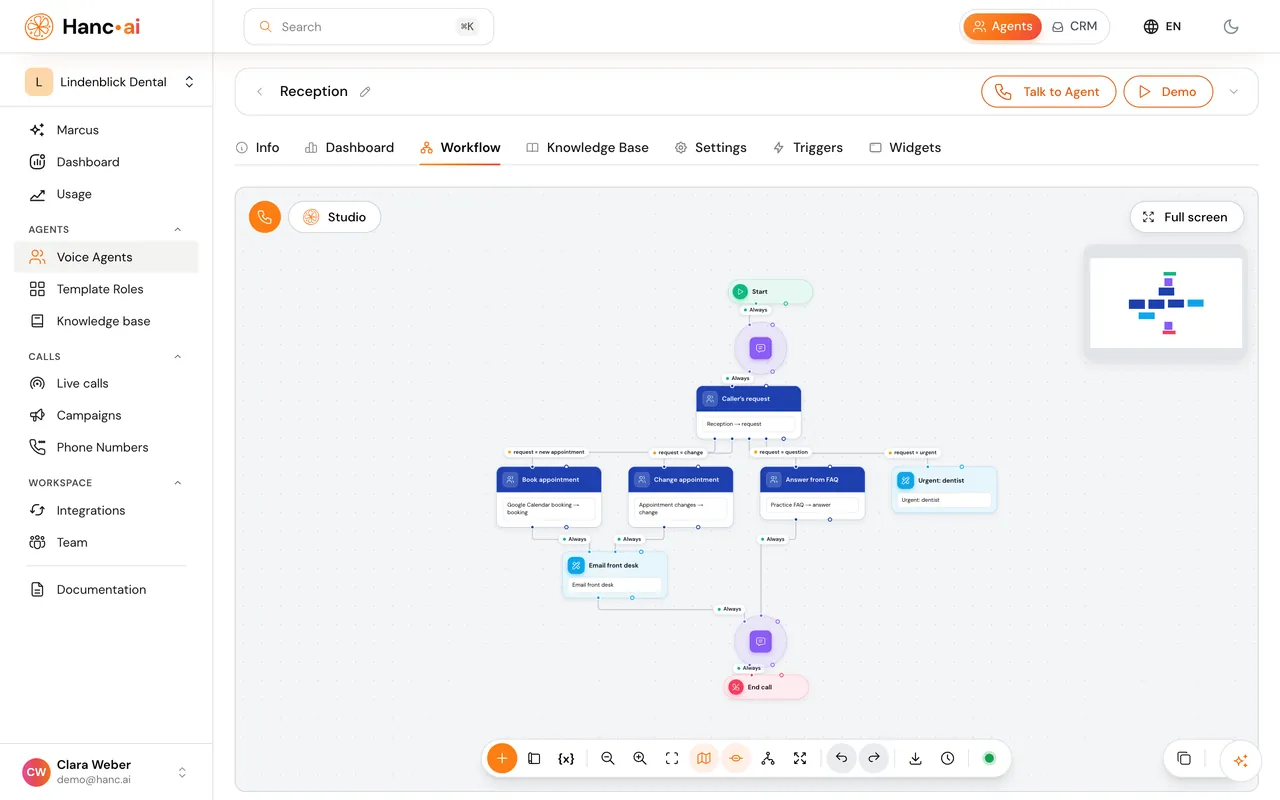
Workflow Agents Are Easier to Spot and Quicker to Build: Agents built as a workflow now carry their Workflow label in the agents list, so you can tell them apart at a glance, and they start clean, the default Email and Phone collection fields are no longer added, because a workflow gathers what it needs inside its own steps.
In the builder, connections between steps are thicker and easier to follow, the per-step Done button is gone because your changes save as you make them, and variable-name fields now suggest the variables already used in the flow, so you no longer have to remember exact spellings, while typing a brand-new name still works.
A Guide to Letting Your Agent Open Pages on Your Site: Your website widget can have the agent take a visitor to a page while the call is running, and there is now a step-by-step guide for it: which paths to give the agent, how to listen for the request on your page, and why you have to acknowledge it, skip that and the agent concludes your site cannot navigate and stops offering for the rest of the call. The example has also been corrected to move the visitor within the page, because a full page reload cuts the call off mid-sentence.